Mastering the Incident Command System: Transform Chaos into Control
The incident command system is an essential framework for managing emergencies effectively. Developed as part of the National Incident Management System (NIMS), it provides a standardized and systematic way to manage incident response. Understanding it can help businesses and emergency responders organize efficiently during crises.
Here’s a quick summary of what the incident command system does:
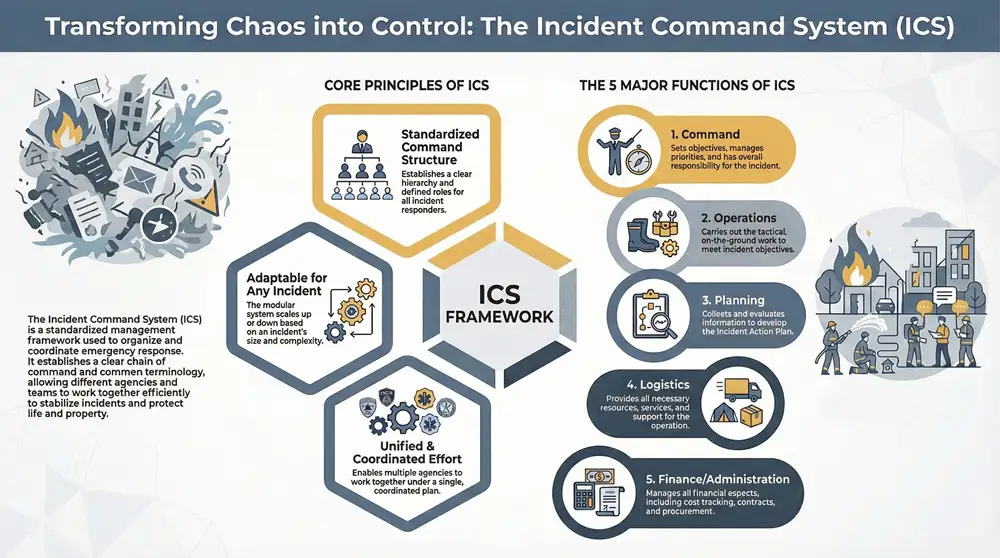
- Standardizes Command Structure: Establishes a clear hierarchy and roles for all incident responders.
- Improves Coordination: Ensures smooth communication between different agencies and teams.
- Improves Resource Management: Helps allocate resources efficiently, ensuring prompt response and recovery.
- Adaptable: Can be scaled and modified according to the size and complexity of the incident.
The world of emergency management can feel overwhelming, especially in today’s environment where risks are at every turn. The incident command system offers the structure and clarity needed to steer emergencies efficiently. Not only is it crucial for public agencies, but businesses, too, can greatly benefit from adopting these principles to safeguard operations and ensure continuity.
Industry leaders and emergency management professionals have often stressed how adopting the ICS framework can transform how we respond to both minor and significant incidents. It’s about shifting from chaos to a state of control, ensuring that every emergency, whether natural or man-made, is handled with precision and effectiveness.
Incident command system vocab to learn:
- cyber security incident management framework
- incident lifecycle itil
- national incident management system
Understanding the Incident Command System
The Incident Command System (ICS) is a cornerstone of modern emergency management. Developed in the 1970s in response to devastating wildfires in California, it was designed to bring order to the chaos of emergency response. The system’s primary goal is to establish a clear chain of command and facilitate effective coordination among various responding agencies.
History
ICS was born out of necessity. During the 1970s, wildfires ravaged parts of California, and the response efforts were often hampered by poor communication and lack of coordination. In response, the National Wildfire Coordinating Group, along with the U.S. Department of Agriculture and other agencies, developed ICS to streamline operations and improve efficiency. Over time, ICS was adopted by other emergency services and became a key component of the National Incident Management System (NIMS).
Features
ICS is known for its flexibility and scalability. Whether dealing with a small local incident or a large-scale disaster, ICS can be adapted to suit the situation. Some of its key features include:
- Common Terminology: Ensures that all responders, regardless of their agency, use the same language to communicate.
- Modular Organization: Allows the system to expand or contract based on the needs of the incident.
- Integrated Communications: Facilitates seamless information sharing among all parties involved.
- Unified Command Structure: Enables multiple agencies to work together under a single, coordinated plan.
Principles
The principles of ICS revolve around clear roles and responsibilities. At its core, ICS is about ensuring that everyone knows their job and how it fits into the larger response effort. The system promotes accountability and efficiency, with a focus on achieving the incident’s objectives.
- Accountability: Every team member knows their role and reports to a designated supervisor.
- Span of Control: Limits the number of people one supervisor can manage, typically between three and seven individuals.
- Resource Management: Prioritizes the allocation and use of resources to meet incident objectives efficiently.
Organizational Structure
The organizational structure of ICS is hierarchical and divided into five major functions:
- Command: Responsible for overall management of the incident.
- Operations: Carries out tactical activities to achieve the incident objectives.
- Planning: Collects and evaluates information to support decision-making.
- Logistics: Provides resources and services needed to support incident operations.
- Finance/Administration: Manages financial, administrative, and cost analysis aspects.
The ICS structure is designed to be flexible, allowing for rapid adjustments as an incident evolves. This adaptability is crucial in maintaining control and ensuring a coordinated response during emergencies.
By understanding the history, features, principles, and organizational structure of the Incident Command System, organizations can better prepare for and manage incidents of all sizes. This knowledge is not only vital for emergency responders but also for businesses seeking to safeguard their operations against potential disruptions.
Key Functions of the Incident Command System
The Incident Command System (ICS) is all about turning chaos into order during emergencies. It achieves this through its key functions: command, control, coordination, and emergency response. Let’s break these down to see how they work together to manage incidents effectively.
Command
At the heart of ICS is the command function. This is where decisions are made, and strategies are developed to tackle the incident. The Incident Commander (IC) holds the reins here, ensuring that everyone is working towards the same objectives. The IC is supported by the Command Staff, which includes the Safety Officer, Public Information Officer, and Liaison Officer. Each plays a crucial role in maintaining safety, managing information flow, and coordinating with other agencies.
Control
Control is about maintaining order and ensuring that the response is carried out efficiently. This involves setting priorities, assigning tasks, and monitoring progress. The Operations Section Chief is key here, directing all actions to meet the incident objectives. They ensure that resources are used effectively and that everyone knows their role.
Coordination
Coordination is the glue that holds the response effort together. It involves integrating efforts across different agencies and ensuring that everyone is on the same page. ICS achieves this through its unified command structure, which allows multiple agencies to work under a single, coordinated plan. This prevents duplication of efforts and ensures a more streamlined response.
Emergency Response
The ultimate goal of ICS is effective emergency response. This involves stabilizing the incident, protecting life and property, and ensuring a return to normalcy as quickly as possible. The Planning Section Chief plays a vital role here, collecting and analyzing information to support decision-making. Meanwhile, the Logistics Section Chief ensures that all necessary resources and services are available to support the operations.
ICS Roles
In ICS, everyone has a specific role to play. The system’s modular design means that roles can be expanded or contracted based on the incident’s needs. This flexibility is crucial, especially in large or complex incidents. The Finance/Administration Section Chief, for example, manages financial aspects, ensuring that costs are tracked and resources are used efficiently.
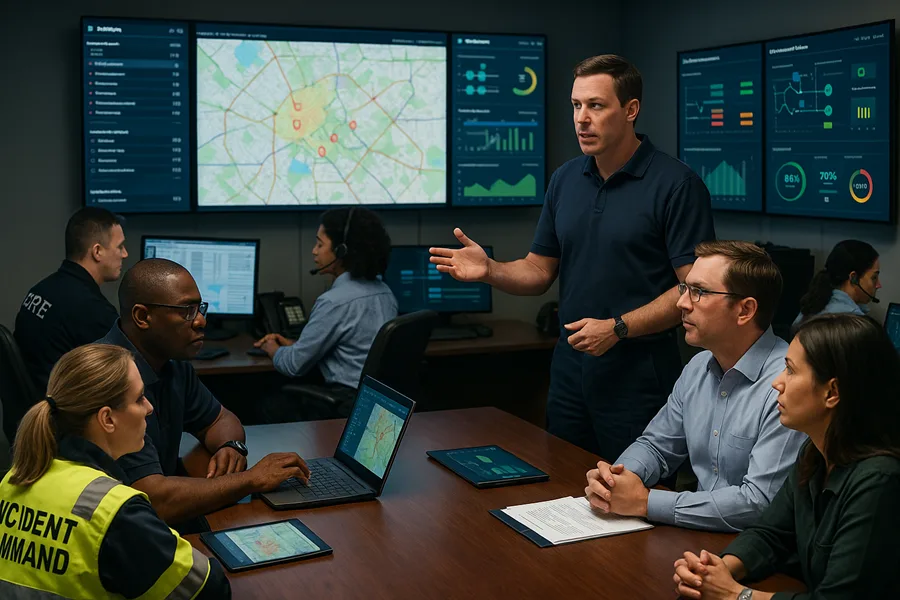
Understanding these key functions and roles within the Incident Command System is essential for anyone involved in emergency management. It’s not just about knowing what to do but also about knowing how to work together effectively.
By mastering these aspects, organizations can ensure a more coordinated and controlled response to any incident, big or small.
Next, we’ll explore how ICS integrates with the National Incident Management System (NIMS) to provide a comprehensive approach to emergency management.
The Relationship Between ICS and NIMS
The Incident Command System (ICS) and the National Incident Management System (NIMS) are like two sides of the same coin in emergency management. They work hand-in-hand to ensure a seamless response to incidents across various sectors. But how exactly do they integrate, and what roles do government agencies and the private sector play?
NIMS: The Bigger Picture
NIMS is the overarching framework that guides how we respond to incidents, big or small. It provides a common language and structure so that everyone—from local firefighters to federal agencies—can work together efficiently. NIMS is all about making sure that when disaster strikes, we’re not speaking different languages or using different playbooks. Instead, everyone is on the same page.
Integration with ICS
ICS is a critical component of NIMS. Think of ICS as the tactical tool that fits within the strategic framework of NIMS. While ICS focuses on the on-the-ground response—who does what, when, and how—NIMS ensures that this response is part of a larger, coordinated effort. This integration allows for a unified approach, whether it’s a small local incident or a large-scale national disaster.
Government Agencies: The Backbone
Government agencies are at the core of both ICS and NIMS. Local, state, and federal agencies are required to adopt NIMS to qualify for federal preparedness grants. This adoption ensures that these agencies are ready to respond in a coordinated manner. FEMA, for instance, plays a pivotal role in training and implementation, offering courses like ICS 100 to prepare responders.
The Role of the Private Sector
The private sector isn’t left out of this equation. Businesses, NGOs, and other non-governmental organizations are encouraged to integrate NIMS into their emergency plans. This inclusion is crucial because incidents often affect more than just public entities. By involving the private sector, NIMS ensures a comprehensive response that covers all aspects of society.
Bridging the Gap
By integrating ICS with NIMS, we bridge the gap between different organizations and sectors. This integration allows for a more efficient use of resources and a more effective response to incidents. It ensures that everyone, from the smallest local agency to the largest federal department, can work together seamlessly.
Understanding the relationship between ICS and NIMS is essential for anyone involved in emergency management. It’s about creating a unified front where everyone knows their role and can act quickly and effectively in the face of disaster.
Next, we’ll dig into how organizations can implement the Incident Command System to improve their preparedness and response capabilities.
Implementing the Incident Command System
Implementing the Incident Command System (ICS) is a vital step for organizations aiming to improve their preparedness and response capabilities. Here’s how it can be effectively put into practice:
Training: The Foundation of ICS
Training is the cornerstone of ICS implementation. Courses like ICS 100 and ICS 200 offer essential knowledge for anyone involved in emergency management. These courses introduce the basics of ICS, covering its history, features, and organizational structure. They are designed to build a strong foundation for higher-level ICS training.
- ICS 100: This introductory course is perfect for beginners. It explains the principles and basic structure of ICS, making it accessible for first responders and emergency planners.
- ICS 200: This course goes a step further, providing more detailed insights into the operational aspects of ICS. It’s ideal for those who have completed ICS 100 and are ready to dig deeper into the system.
Both courses are developed by the Emergency Management Institute in collaboration with key organizations like the National Wildfire Coordinating Group and the United States Fire Administration.
Preparedness Grants: Incentivizing Adoption
To encourage the adoption of ICS and the broader National Incident Management System (NIMS), the federal government offers preparedness grants. These grants are crucial for local, state, territorial, and tribal nation jurisdictions. To qualify, these entities must adopt NIMS, ensuring they are prepared to respond in a coordinated manner. This requirement not only incentivizes the adoption of standardized practices but also improves overall readiness.
FEMA: The Guiding Force
The Federal Emergency Management Agency (FEMA) plays a pivotal role in the implementation of ICS. FEMA provides the necessary resources, tools, and training to ensure that organizations are well-equipped to handle incidents. Their regional NIMS coordinators are subject matter experts, ready to assist state, local, territorial, or tribal nation governments in adopting and integrating ICS into their emergency plans.
By focusing on training, leveraging preparedness grants, and utilizing FEMA’s resources, organizations can effectively implement the Incident Command System. This implementation not only improves their ability to respond to emergencies but also ensures a coordinated effort across different sectors and levels of government.
Next, we’ll explore how the Incident Command System comes to life in real-world scenarios, stabilizing incidents and facilitating efficient crisis communications.
Incident Command System in Action
When disaster strikes, the Incident Command System (ICS) springs into action, changing chaos into order. Let’s see how it works on the ground.
Incident Stabilization
The first goal during an emergency is to stabilize the situation. This means taking quick actions to stop things from getting worse. Imagine a fire breaking out in a large office building. Firefighters use ICS to organize their response, making sure everyone knows their role and what needs to be done. This includes containing the fire, rescuing anyone in danger, and preventing further damage. The ICS helps ensure that these tasks are done efficiently and safely.
Emergency Operations Center (EOC)
The Emergency Operations Center (EOC) is like the brain of the operation. It’s where key decision-makers gather to manage the incident. Whether it’s a physical room or a virtual meeting space, the EOC coordinates resources and support. Its job is to keep the response organized and informed. For example, during a hurricane, the EOC can track the storm’s path, communicate with emergency responders, and ensure supplies reach affected areas. By having a central hub of information, the EOC helps keep everyone on the same page.
Crisis Communications
In any emergency, clear communication is crucial. This is where crisis communications come into play. The Public Information Officer (PIO) is responsible for getting accurate information out to the public, media, and other stakeholders. This helps prevent rumors and keeps communities informed about what to do. For instance, during a chemical spill, the PIO might issue alerts about evacuation zones and safety precautions. Effective communication can save lives and reduce panic.
By using the Incident Command System, organizations can manage emergencies more effectively. ICS provides a structured way to stabilize incidents, coordinate resources through the EOC, and ensure clear communication during crises. This system not only helps control the situation but also reassures the public that everything is being handled professionally.
Next, we’ll tackle some common questions about the Incident Command System, including its major functions and differences from other management systems.
Frequently Asked Questions about the Incident Command System
Conclusion
At Concertium, we understand that managing incidents effectively is crucial for maintaining business continuity and security. With nearly 30 years of expertise in the cybersecurity industry, we offer custom solutions that align with the principles of the Incident Command System (ICS) to bring order to chaos.
Our Collective Coverage Suite (3CS) leverages AI-improved observability and automated threat eradication to provide robust cybersecurity defenses. This ensures that our clients are not only protected but also empowered to focus on growth without the constant worry of cyber threats.
We believe in the power of custom solutions. Every business is unique, and so are its challenges. That’s why we work closely with our clients to design security measures that fit their specific needs. Whether it’s threat detection, compliance, or risk management, our services are crafted to ensure maximum protection with minimal disruption.
By choosing Concertium, you’re not just investing in cybersecurity; you’re investing in peace of mind. Let us help you master incident management with confidence, turning potential chaos into controlled, efficient response actions. Explore our services to see how we can help your business thrive in today’s digital landscape.