AI Overview:
Governance Risk Assessment (GRA) is the foundation of modern business resilience—helping organizations identify, evaluate, and manage risks that threaten strategic, financial, operational, or ethical goals. In a world of expanding cyber threats and regulatory pressures, effective governance risk assessment ensures informed decision-making and sustainable performance.
Governance Risk Assessment: 5 Essential Tips 2025
Why Governance Risk Assessment is Critical for Modern Organizations
Governance risk assessment is a systematic process for identifying, evaluating, and managing risks to an organization’s strategic objectives, compliance, and ethical standards. It is the cornerstone of effective business governance in today’s complex regulatory landscape.
Quick Answer: What is Governance Risk Assessment?
- Purpose: Identify and manage risks that threaten organizational objectives
- Scope: Covers strategic, operational, financial, compliance, and cybersecurity risks
- Process: Systematic evaluation of risk likelihood and impact
- Outcome: Informed decision-making and proactive risk mitigation
- Frequency: Ongoing process with formal reviews at least annually
Modern businesses face expanding threats, from cyber attacks to supply chain disruptions. With only 53% of organizations considering their risk and compliance programs mature, a robust governance risk assessment is critical. Without it, companies risk financial losses, legal penalties, reputational damage, and operational inefficiencies.
However, organizations that implement integrated GRC (Governance, Risk, and Compliance) frameworks gain significant advantages. They make better, risk-aware decisions, reduce operational costs, and access critical information faster for strategic planning.
As one leading research organization notes: “GRC combines governance, risk management, and compliance in one coordinated model. This helps your company reduce wastage, increase efficiency, reduce noncompliance risk, and share information more effectively.”

Governance risk assessment terms to know:
What is Governance, Risk, and Compliance (GRC)?
Governance, Risk, and Compliance (GRC) is an integrated approach for achieving what the Open Compliance and Ethics Group (OCEG) calls “Principled Performance®” – reliably achieving objectives while addressing uncertainty and acting with integrity. GRC aligns governance, risk management, and compliance into a unified framework, breaking down organizational silos to improve efficiency and information sharing. This coordinated approach helps organizations make smarter decisions and respond more quickly to challenges. For a deeper dive, see our guide on Governance, Risk, and Compliance (GRC) Explained.
Steering the Ship Through Governance
Governance is the decision-making framework of an organization. Corporate governance encompasses the policies, procedures, and structures that define authority and accountability. Effective governance promotes ethical behavior and balances the interests of all stakeholders—employees, customers, investors, and the community—to build trust and enable confident, rapid decision-making.
Risk management is the proactive process of navigating business uncertainty. It begins with risk identification to spot potential threats and opportunities. Risk analysis then evaluates the likelihood and impact of each risk to prioritize focus. Mitigation strategies are then developed to reduce risks to acceptable levels while capitalizing on opportunities, building organizational resilience. This opportunity management approach integrates risk into all decision-making, improving long-term sustainability. Explore these concepts further in Mastering Risk Management Compliance Strategies.
Meeting Standards Through Compliance
Compliance ensures an organization operates within external regulations and internal policies. This includes navigating complex laws like GDPR and adhering to internal codes of conduct. Proactive compliance anticipates regulatory trends rather than just reacting to them, reducing legal risks and fostering an ethical culture. When integrated into a GRC framework, compliance becomes a strategic enabler that informs governance and risk strategies. Learn more in our guide to Compliance and Risk Management.
The Strategic Importance of a Governance Risk Assessment Framework
A robust governance risk assessment framework is a strategic asset, shifting an organization from a reactive to a proactive mindset. It provides the visibility to make better decisions in a risk-aware environment, leading to more responsible operations and a stronger, more resilient organization.
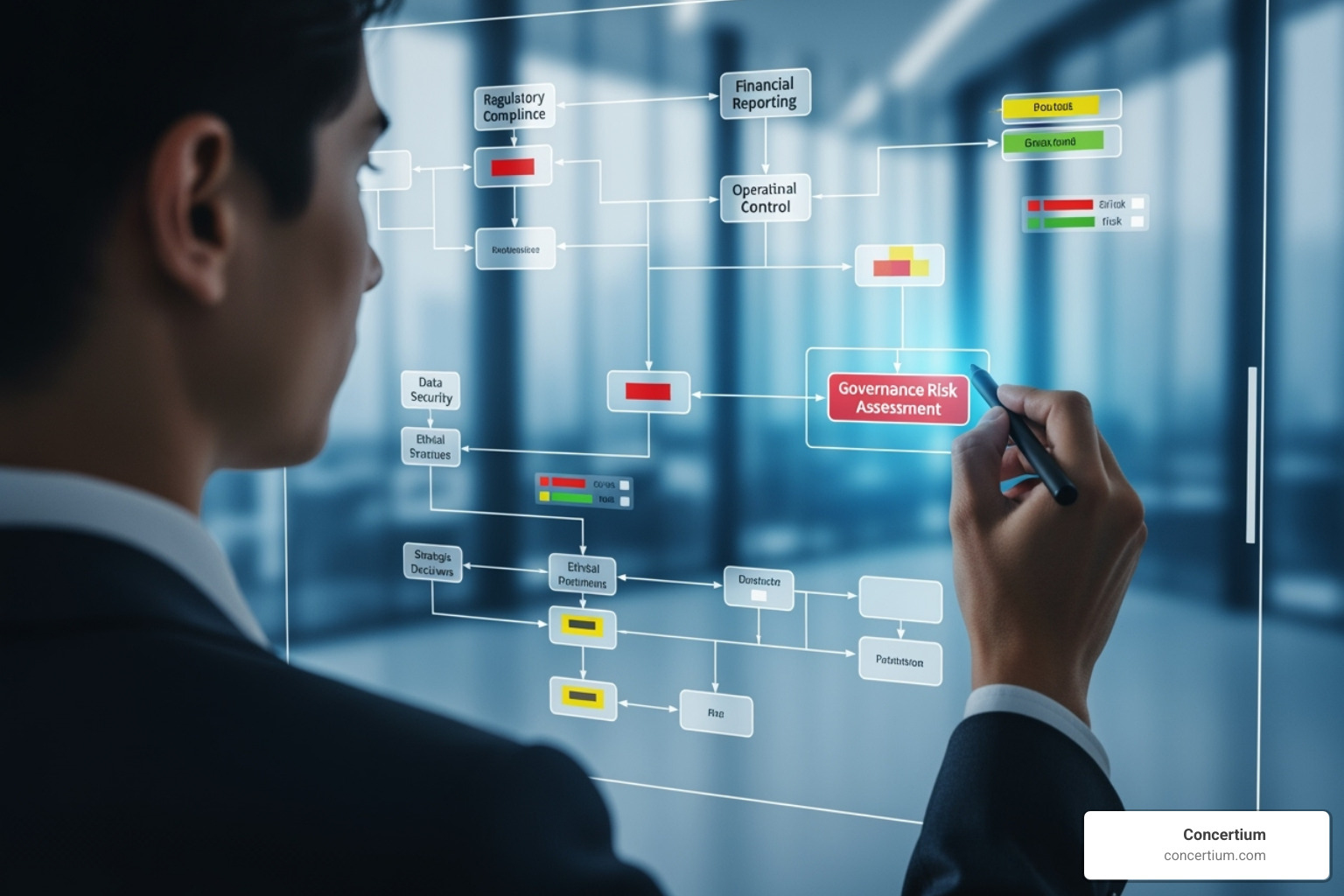
A well-designed GRC framework connects governance, risk, and compliance, ensuring all operations align with strategic objectives while meeting legal requirements. Our Enterprise Governance, Risk, and Compliance services are built on this principle.
Key Benefits of an Integrated Approach
An integrated GRC approach delivers powerful benefits by breaking down departmental silos:
- Strategic Alignment: Ensures daily workflows support long-term goals.
- Improved Visibility: Provides a complete, consolidated view of the risk landscape for better decision-making.
- Cost Savings: Eliminates duplicated efforts and frees up resources.
- Increased Agility: Enables faster adaptation to market changes and quicker recovery from disruptions.
The Consequences of a Weak GRC Strategy
Organizations with immature GRC strategies face significant and preventable risks. The consequences are severe:
- Financial Losses: Unexpected events like cyberattacks or fraud can be devastating.
- Legal Penalties: Non-compliance with increasingly complex regulations can lead to steep fines and ongoing scrutiny.
- Reputational Damage: Trust lost from compliance failures or ethical lapses can take years to rebuild.
- Operational Inefficiency: Organizational silos lead to duplicated efforts, wasted resources, and unclear objectives.
These consequences underscore why a robust governance risk assessment is a fundamental requirement for sustainable success.
How to Conduct a Comprehensive Governance Risk Assessment
Conducting a comprehensive governance risk assessment creates a data-driven roadmap for navigating uncertainty. The process is guided by two key concepts: risk appetite (the strategic amount of risk you’re willing to accept to achieve goals) and risk tolerance (the specific, measurable deviation you can handle for a particular risk).
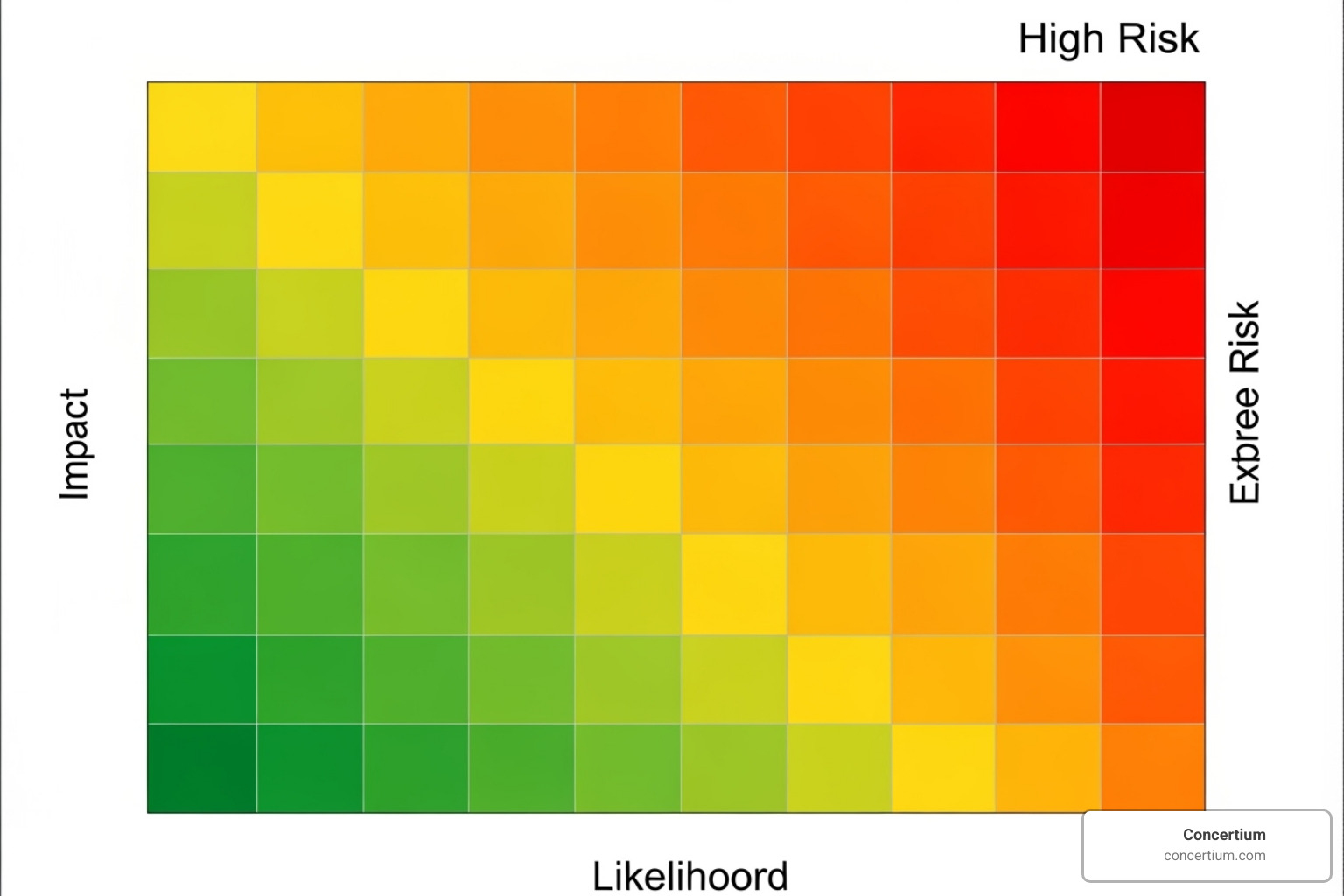
This systematic approach is the foundation of our Compliance Risk Assessment and Cybersecurity Risk Assessment Services.
Step 1: Establish the Governance Structure and Define Scope
A solid foundation is critical for a successful assessment. This involves securing leadership buy-in, as executive champions transform GRC from a compliance exercise into a strategic enabler.
Next, identify key stakeholders (executives, legal, finance, HR, IT, business units) and establish clear roles and responsibilities, often using a RACI matrix (Responsible, Accountable, Consulted, Informed). With the team in place, set clear objectives for the assessment and define the organization’s risk appetite and tolerance levels. For example, a company might have a high appetite for innovation risk but zero tolerance for safety incidents. This structure is central to our Risk Compliance Advisory services.
Step 2: A Practical Approach to Governance Risk Assessment
This step involves identifying and analyzing specific threats and opportunities.
Risk identification uses multiple techniques to cast a wide net:
- Brainstorming sessions with diverse teams.
- Structured interviews with employees at all levels.
- Industry checklists and historical data analysis of past incidents.
- Scenario planning to anticipate future conditions.
Risk identification should be an ongoing process integrated into daily workflows, not a one-time event.
Risk analysis evaluates each identified risk on two dimensions: likelihood (probability) and impact (consequence). Plotting these on a risk matrix helps prioritize which risks require immediate action, which require monitoring, and which are negligible. This analytical rigor is central to our Conduct Vulnerability Risk Assessment methodology.
Step 3: Implement Controls and Mitigation Plans
This step turns risk insights into concrete protective actions. Risks typically fall into five categories: Strategic, Operational, Financial, Compliance, and Cybersecurity.
For each prioritized risk, design custom controls:
- Preventative controls stop problems before they start (e.g., access controls, training).
- Detective controls spot issues quickly (e.g., audit trails, security monitoring).
- Corrective controls minimize damage and restore operations (e.g., disaster recovery plans).
Effective mitigation requires assigning clear ownership, providing adequate resources, and setting realistic timelines. The goal is not to eliminate all risk, but to manage it within the defined appetite. Our Vulnerability Risk Management services help organizations implement these practical controls.
Step 4: Overcoming Common Challenges in the Governance Risk Assessment Process
Anticipating common obstacles is key to success. Key challenges include:
- Lack of executive support: Overcome by demonstrating GRC’s strategic value and ROI.
- Departmental silos: Address with intentional collaboration and shared technology platforms.
- Complex regulations: Use technology to monitor changes, but apply human judgment for implementation.
- Insufficient training: Implement comprehensive, ongoing training to build awareness and competency.
- Technology integration issues: Plan carefully for integrated GRC platforms to create a holistic risk view.
- Weak ethical culture: Foster through leadership modeling, transparent communication, and accountability.
Proactively addressing these challenges ensures the assessment process delivers real value. Our Compliance Risk Assessment 5 Essential Expert Tips offer more guidance.
Implementing and Sustaining Your GRC Strategy
Implementing a governance risk assessment framework is an ongoing process of adaptation, not a one-time project. As threats, regulations, and markets evolve, your GRC strategy must evolve with them, fostering a culture of continuous improvement.
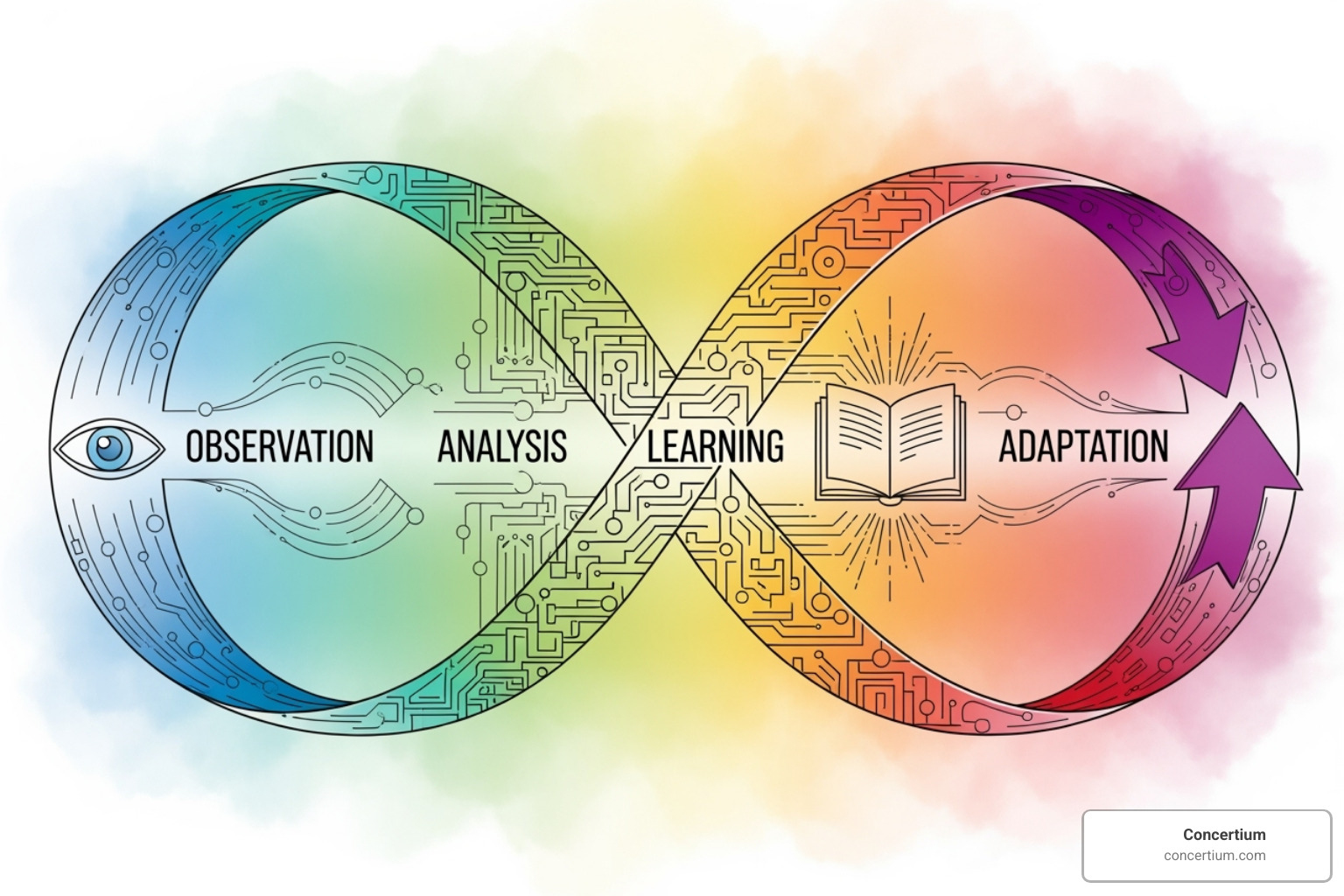
This mindset is a core principle of our Cybersecurity Risk Management Frameworks approach.
The Role of Technology and Automation
Managing GRC manually is no longer feasible. GRC software platforms are essential, creating a single source of truth with centralized data, automated workflows, and real-time reporting.
Artificial intelligence is revolutionizing GRC by making processes smarter, not just faster. AI can analyze regulatory changes, map them to existing controls, and scan data to flag emerging risks. These tools can forecast compliance challenges and automate audit documentation, changing GRC from a reactive to a predictive function. While AI requires oversight to manage bias, its potential to streamline operations is immense. Our GRC Automation Tools and Risk and Compliance Tools Guide explore these technologies further.
Continuous Monitoring and Evaluation
A GRC strategy requires regular check-ups to remain effective. Continuous monitoring relies on meaningful metrics to track performance, such as incident resolution times, risk assessment scores, and compliance audit findings.
Regular reviews and audits (both internal and external) provide context behind the numbers, helping to identify control gaps and blind spots. Actively seeking stakeholder feedback creates a crucial loop for understanding why issues occur and how to improve. Modern GRC software provides dashboards and reporting tools for real-time visibility, which we leverage in our Enterprise Security Risk Assessment services.
Fostering a Risk-Aware Culture Through Training
Technology and processes are ineffective without the right culture. A risk-aware culture begins when employees understand the “why” behind GRC and see how their actions contribute to protecting the company.
Effective training should be interactive and ongoing, starting from onboarding. It should include simulated risk scenarios and be reinforced with clear, regular communication that avoids jargon. Leadership development is also critical, as managers who model good risk management behaviors create a positive ripple effect. The result is an organization where everyone, from the top down, understands their role in GRC, leading to fewer incidents and greater efficiency.
Frequently Asked Questions about Governance Risk Assessment
Here are answers to some of the most common questions we hear about governance risk assessment.
Secure Your Organization with a Proactive GRC Framework
A mature governance risk assessment framework is not a compliance burden but a strategic advantage. It builds resilient organizations that emerge stronger from disruptions, unlike the many businesses still struggling with immature risk programs.
Achieving this requires a commitment to a continuous improvement cycle: monitor, evaluate, train, and adapt. Leadership must champion the vision, technology must act as a force multiplier, and every employee must become a guardian of organizational integrity.
The stakes are clear. Weak GRC leads to financial, legal, and reputational damage. A robust framework, however, builds stakeholder trust and creates a sustainable competitive advantage.
At Concertium, our Collective Coverage Suite (3CS) integrates enterprise-grade cybersecurity with your GRC strategy, offering AI-improved observability and automated threat eradication custom to your needs. With nearly 30 years of experience, we design threat detection, compliance, and risk management services that evolve with your business.
The question isn’t whether you can afford a mature GRC framework—it’s whether you can afford not to.
Ready to transform your approach to risk? Strengthen your GRC posture with expert consulting and compliance services and find how Concertium can help you build a more resilient and trustworthy organization.