AI Overview:
Data governance, risk, and compliance (GRC) have evolved into a strategic necessity for modern businesses. With data breaches averaging $4.88 million in losses, organizations can no longer afford fragmented data practices. GRC ensures not only compliance but also operational efficiency, security, and long-term business resilience.
Why Data Governance Risk and Compliance is Essential in Today’s Digital World
Data governance risk and compliance has become the cornerstone of business survival in our digital-first world. With the average cost of a data breach reaching $4.88 million according to IBM, organizations can no longer treat data management as an afterthought.
What is Data Governance Risk and Compliance (GRC)?
GRC is an integrated strategy that combines:
- Data Governance: The framework of policies and standards for managing data effectively.
- Risk Management: The process of identifying, assessing, and mitigating threats to your data.
- Compliance: Adherence to regulatory requirements like GDPR and CCPA.
Effective GRC relies on clear data policies, regular risk assessments, robust security controls, compliance tracking, and employee training.
The stakes are high. Many tech leaders feel their data doesn’t meet quality and security standards, while data breaches and regulatory fines continue to rise. But GRC isn’t just about avoiding disaster; it’s about creating a strategic advantage. Organizations with strong GRC frameworks report 52% higher revenue growth.
This guide will walk you through building a bulletproof GRC strategy, covering risks, proven frameworks, and emerging trends.

Data governance risk and compliance terminology:
The High Stakes: What Happens When Data Governance is Overlooked?
Running a business without proper data governance risk and compliance is like navigating a storm with broken instruments. The numbers don’t lie: millions of data records are exposed annually, often due to basic governance failures like unclear access policies or poor quality controls.
Overlooking GRC fundamentals leads to a cascade of negative consequences:
- Financial Losses: Costs from breaches and poor decisions based on unreliable data pile up quickly.
- Reputational Damage: In our social media age, news of mishandled data spreads like wildfire, eroding customer trust.
- Operational Inefficiency: Teams waste time and resources when they can’t rely on the information they’re working with.
- Increased Cybersecurity Threats: Without clear data classification and access controls, hackers find easy targets. A single compromised account can expose entire databases.
- Regulatory Penalties: Regulators now wield serious financial weapons. The GDPR (General Data Protection Regulation) can impose fines up to 4% of annual global revenue, and the CCPA (California Consumer Privacy Act) adds another layer of complexity. The SEC now requires public companies to disclose cybersecurity incidents and report on their GRC strategies, scrutinizing not just breaches but overall risk management.
The message is clear: data governance risk and compliance isn’t optional. It’s the difference between building a sustainable business and becoming another cautionary tale. Understanding these fundamentals is crucial, as we explore in our guide to Data Governance, Risk, and Compliance (GRC) Explained.

Building Your GRC Fortress: A Blueprint for Success
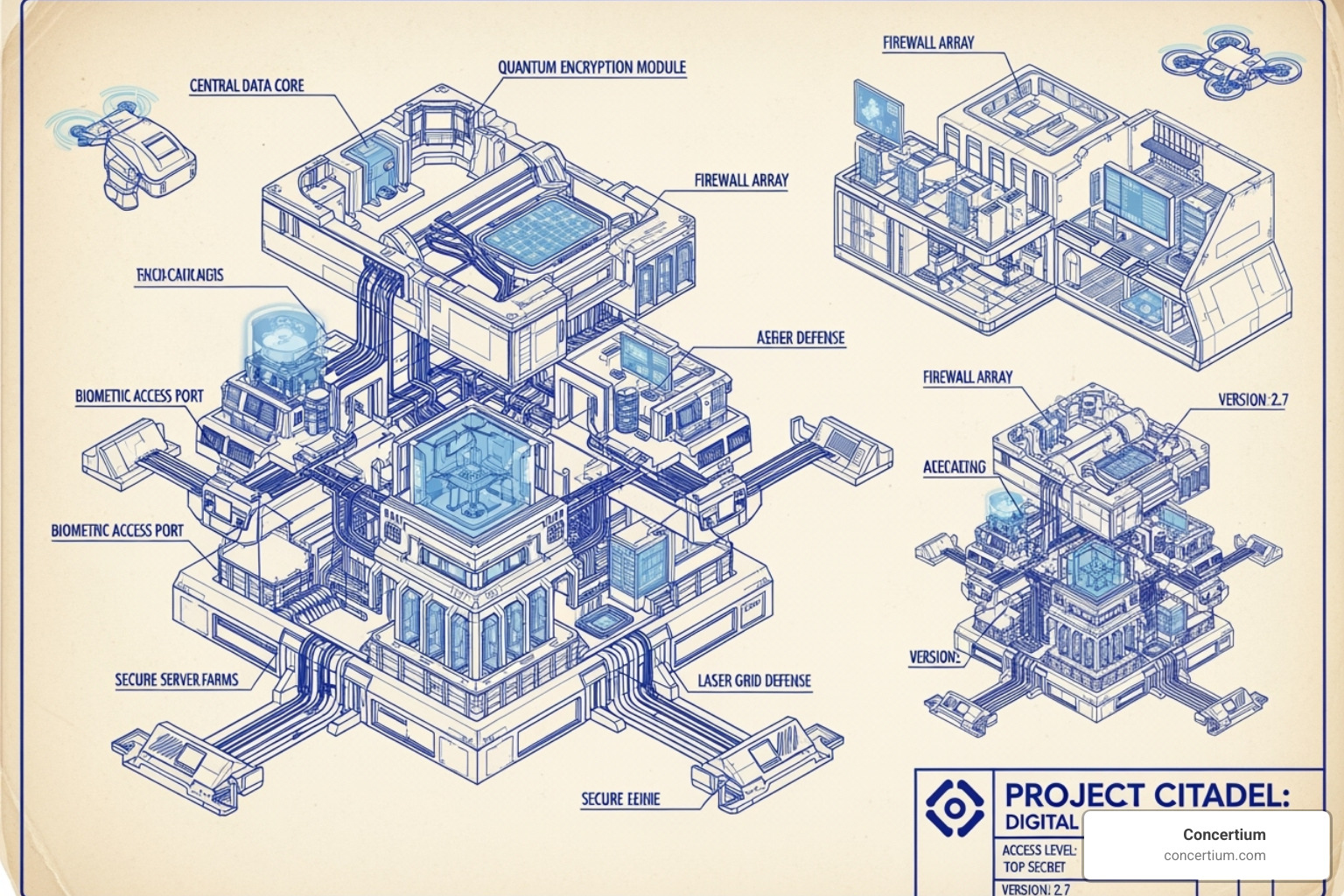
Building a robust data governance risk and compliance framework is about creating a strategic, multi-layered defense system for your data. The key is to shift from a reactive to a proactive approach, anticipating challenges and building defenses before threats emerge.
This requires aligning IT operations with business goals through cross-functional collaboration between legal, IT, finance, and business units. An integrated approach, as detailed in our guide to Mastering Risk Management Compliance Strategies, is key.
The Core of an Effective Data Governance Risk and Compliance Strategy
A strong GRC strategy is built on several critical foundations:
- Data Classification: Categorizing information by sensitivity to focus protection efforts where they matter most.
- Clear Policies and Standards: Practical, living guidelines that help employees make smart decisions about data handling.
- Data Ownership and Stewardship: Assigning accountability for data quality and security to dedicated champions.
- Regular Risk Assessments: Ongoing evaluations to stay ahead of evolving threats. Our Compliance Risk Assessment services can help identify vulnerabilities.
- Robust Security Controls: The technical backbone, including encryption and access controls, that translates policy into protection.
Best Practices for Policies, Ownership, and Risk Assessments
To implement these components effectively, focus on making good governance feel natural, not burdensome.
- Establish Data Lifecycle Management: Create clear guidelines for data from creation to deletion to prevent it from becoming a liability.
- Assign Data Stewards: Empower individuals to bridge the gap between technical needs and business requirements, acting as educators and champions for data quality.
- Define Accountability: Ensure everyone knows their responsibilities to address issues quickly.
- Use Role-Based Access Controls (RBAC): Limit data exposure by granting access based on job function, following principles like those outlined by NIST.
- Automate Assessments: Use technology for continuous compliance monitoring to flag issues proactively. Our Compliance Risk Analysis approach helps organizations address gaps systematically.
Weaving It All Together: Integrating GRC into Your Business Fabric
Effective data governance risk and compliance should be woven into your organization’s fabric, not siloed in a separate department. A holistic approach breaks down barriers between IT, legal, and operations, uniting them around the common goal of turning data into a strategic asset.
When GRC is a natural part of operations, it transforms from a compliance checkbox into a competitive advantage. This unified strategy, central to our IT Governance, Risk, and Compliance services, creates a culture where security is second nature.
How Data Governance Strengthens Cybersecurity and Data Protection
Data governance is cybersecurity’s best friend. Clear policies on data handling, access, and retention make it much harder for bad actors to go undetected.
- Mitigating Data Breaches: Proper data classification and role-based access controls limit exposure if a single account is compromised.
- Improved Threat Detection: When you know what normal data access patterns look like, spotting anomalies becomes almost automatic.
- Ensuring Data Integrity: Governance ensures your information remains accurate and trustworthy, preventing corruption or manipulation.
- Secure Data Handling Policies: Clear rules for the entire data lifecycle reduce the risk of human error turning into a major incident.
Understanding What is Cybersecurity Compliance? is more manageable with a solid data governance foundation.
Ensuring Regulatory Compliance with a GRC Framework
A well-integrated GRC framework brings order to the chaos of regulatory compliance.
- Building Auditable Trails: When regulators inquire, you can provide a detailed record of who accessed what data, when, and why, demonstrating due diligence.
- Meeting Regulatory Requirements: A solid GRC structure helps you meet the common requirements of regulations like GDPR, CCPA, and HIPAA without reinventing the wheel for each one.
- Avoiding Penalties: By building compliance into your processes, avoiding fines and reputational damage becomes a natural byproduct of your operations, a core principle of our Compliance and Risk Management approach.
The Future of Data Governance Risk and Compliance
The digital landscape is evolving rapidly, and data governance risk and compliance strategies must keep pace. We’re no longer just managing simple databases; we’re dealing with massive data streams, AI-driven decisions, and global cloud environments. This complexity creates both incredible opportunities and significant risks.
With over 90% of global businesses using the cloud, traditional GRC frameworks are being tested. Organizations that adapt will thrive, while those that don’t risk falling behind.

The Impact of AI, DataOps, and Unified Platforms
A recent IBM study found that only 29% of tech leaders believe their data is ready to scale generative AI. This highlights a massive gap between ambition and reality.
- AI-Powered Automation: AI can now automate data classification, spot anomalies, and predict risks. However, this introduces new generative AI risks, such as data bias and privacy violations, requiring governance of the AI models themselves.
- Privacy-Enhancing Technologies (PETs): Innovations like differential privacy allow organizations to analyze data without exposing sensitive information.
- DataOps Automation: Applying DevOps principles to data management streamlines pipelines, ensuring consistency and quality while reducing human error. Our Automated Compliance Monitoring services help leverage these capabilities.
- Unified Data Platforms: Organizations are moving away from scattered data silos toward centralized platforms for cataloging, lineage tracking, and quality control, improving governance oversight.
Securing the Cloud: GRC in Cloud Environments
Cloud security operates on a shared responsibility model: the provider secures the cloud, while you secure your data in the cloud.
- Cloud Security Best Practices: This includes robust encryption, secure network configurations, and sophisticated identity and access management.
- Continuous Monitoring: Real-time visibility is non-negotiable in dynamic cloud environments to detect misconfigurations and threats as they happen.
- Access Management: Role-based access control (RBAC) policies must be extended to the cloud to ensure only authorized users and services can access sensitive data.
- Vendor Risk Management: You must understand your cloud provider’s security posture, as their security is an extension of your own.
Navigating cloud complexities can be daunting. Our Risk Compliance Advisory services help organizations develop secure and compliant cloud strategies.
Fostering a Culture of Compliance and Measuring Success
A successful data governance risk and compliance program is about more than technology and policies; it’s about people. Without executive buy-in and a cultural shift where everyone understands their role, even the best GRC frameworks will fail. The biggest challenge is often not technical but cultural—making GRC a fundamental part of how business gets done.
Effective programs require long-term commitment and a genuine mindset shift across the organization.
Creating a Company-Wide Culture of Data Literacy
Making GRC stick means making it everyone’s responsibility. When employees understand the ‘why’ behind data protection, they become your strongest defense.
- Training and Awareness Programs: Go beyond boring presentations. Use practical examples to show how daily actions protect the company and its customers.
- Empowering Employees: Treat employees as data champions. When a marketing team member understands GDPR, they are more likely to handle customer data correctly.
- Making Compliance Everyone’s Job: From finance to HR, every department has a role to play in protecting data. This is especially critical in specialized industries, as shown in our work on Compliance Strategies for PE/VC Firms.
- Clear Communication: Policies should be accessible, practical, and explain the reasoning behind the rules.
Measuring the Success of Your Data Governance Risk and Compliance Program
You can’t manage what you don’t measure. A successful GRC program requires clear metrics to track progress and demonstrate value.
- Key Performance Indicators (KPIs): Track metrics like data quality scores, time-to-resolution for data issues, and compliance audit success rates.
- Key Risk Indicators (KRIs): Use these as an early warning system. Track metrics like unauthorized access attempts or the volume of sensitive data in transit.
- The Role of Internal Audit: An independent audit provides a crucial perspective on the maturity of your GRC practices.
- Reporting and Review Cycles: Regular reviews with stakeholders ensure continuous improvement and keep GRC visible to leadership. This systematic approach is central to our Cybersecurity Compliance Consulting: Top 5 Proven methodologies.

Success isn’t just about avoiding penalties; it’s about building an organization where data protection is second nature, turning a potential liability into a competitive advantage.
Frequently Asked Questions about Data GRC
Let’s address the most common questions we hear from organizations starting their data governance risk and compliance journey.
What are the first steps to starting a data governance program?
Start small and focus on what matters most. First, conduct a risk assessment to identify and locate your most sensitive data. Next, establish foundational governance policies for data access, security, and quality. Crucially, secure executive sponsorship early to provide the authority and resources needed for success. Begin with a pilot project on critical data to demonstrate value before scaling up.
How does GRC provide a business advantage?
GRC transforms from a cost center into a competitive advantage in several ways. It builds customer trust, which is essential for loyalty and engagement. It also improves decision-making by ensuring data is reliable and accurate. This leads to greater operational efficiency as teams spend less time cleaning data and more time using it. GRC mitigates the significant financial and reputational risks of breaches and non-compliance, contributing to higher revenue growth.
What is the difference between data governance and IT governance?
Think of IT governance as the broad framework that aligns all IT resources and strategies with business objectives. It covers everything from infrastructure to applications. Data governance is a specialized subset of IT governance that focuses exclusively on an organization's data assets—ensuring their quality, usability, security, and compliance. Strong IT governance provides the structure for effective data governance to succeed.
Conclusion: Turn Your Data Risk into a Strategic Advantage
Data governance risk and compliance is no longer just an IT checklist item—it’s a critical driver of business success. As we’ve seen, ignoring GRC leads to costly data breaches, steep regulatory fines, and a loss of customer trust.
The good news is that a proactive approach to GRC does more than just prevent disaster. It turns your data from a liability into a powerful strategic asset. Organizations with strong GRC frameworks report significantly higher revenue growth because they can make better decisions, operate more efficiently, and earn the trust of their customers.
The landscape is constantly evolving with AI, cloud computing, and new regulations. A proactive, agile GRC strategy is essential to steer these changes.
At Concertium, we specialize in integrating enterprise-grade cybersecurity with comprehensive compliance and risk management. Our unique Collective Coverage Suite (3CS) is designed to provide custom solutions that anticipate and neutralize threats.
Don’t let data risk hold your business back. Take a proactive stance on IT Governance, Risk, and Compliance and open up your data’s full potential.